Recruiting horses to build platforms in smart home Google to abandon Android?
OFweek smart home network news Google's parent company Alphabet is mobilizing a group of developers from its subsidiary, Nest, in order to increase Google's influence in the field of smart home. According to The Verge reports, these developers had previously been responsible for the development of Next Smart Home Platform. They are now working with Hiroshi Lockheimer, head of the Android system, to help Google achieve its goal of occupying the living room.
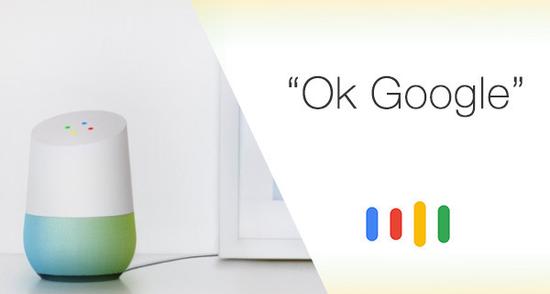
The transfer of the engineers happened just when Google was preparing to launch a smart speaker called Google Home. Google announced that this speaker will be launched at the I/O Developer Conference in May, against the standard Amazon Echo, which was independently developed by Google (not based on the Android system). Nest, and its related application platforms, are ready to collaborate with Belkin, Philips, and August, a maker of smart door locks. So you can be sure that Google will recruit some talent at Nest to advance this work.
This is Nest's latest organizational structure change. Nest was founded in 2010 and is a famous smart home manufacturer. It was acquired by Google for 0 million in 2014. However, after the big reorganization in August last year, Nest disengaged from Google’s actual control. This brought pressure to Nest in terms of R&D and profitability. After an intense ideological struggle, its co-founder Tony Fadell left Nest in June this year. Since then, another founder Matt Rogers took over the role of the company's product manager. It is reported that Rogers had previously served as vice president of technology.
Now, dozens of Nest employees will take Google’s money to do things for Google, commit to develop a third-party integration platform, and report directly to Android head Lockheimer. This is the same team that previously developed Brillo and Weave (Google’s Internet of Things program and its programming language), Google’s Internet of Things and smart home platforms, and connection protocol technology.
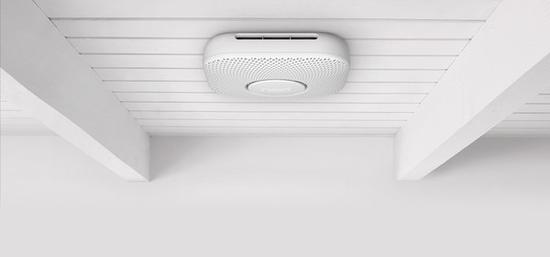
So, where will Nest's separated hardware and software departments go from here? At present, the company itself is still a subsidiary of Alphabet, and will still produce Nest-based temperature sensors, cameras, smoke detectors, and supporting software for the underlying hardware. Nest's platform development team will play an intermediary role in the adaptation of Nest and Google.
In April, Recode reported that Rick Osterloh, the former president of Motorola, will launch a project that includes Chromecast, Chromebooks, Nexus devices, Google OnHub routers, ATAP (Advanced Technology and Planning), and the remnants of Google Glass (now Project Aura). Smart home kit products. At the same time, it is said that Osterloh will work more closely with Lockheimer to focus more attention on software and platform development.
All this shows that establishing a connection between Nest, Android, and Google and setting up a new hardware business unit is already a well-planned project. This can help Google's Google Home team to better complete smart speakers through the integration of third-party resources to counter Amazon's products. This also allows Nest to have the opportunity to participate in more large-scale hardware projects at Google. This time, Nest and HomeKit's battle for the smart home platform has become a battle between Google and Apple.
182 mono perc half cells
Solar Panel 540W,182 Mono Perc Half Cells,Solar Panel Mono Perc 540W,Solar Panel 182mm
Zhejiang G&P New Energy Technology Co.,Ltd , https://www.solarpanelgp.com
برچسب: ،