All aspects of fastener product implementation standards
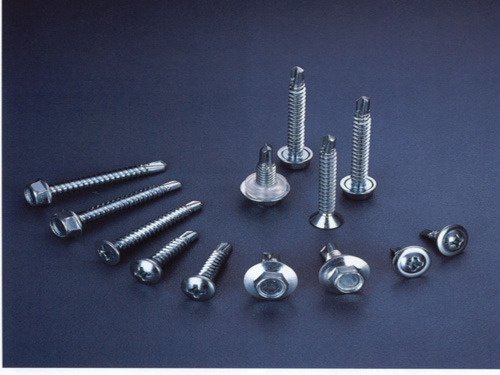
1. Standards of fasteners in terms of size: Specifies the basic dimensions of the product. Threaded products also include the basic dimensions of the thread, thread finish, shoulder spacing, undercuts and chamfers, and ends of externally threaded parts. Size and other aspects.
2, the fastener product technical conditions standards. Specific include the following content standards:
a) Standards for fastener product tolerances: Specify the product size tolerances and geometric tolerances.
b) Standards for the mechanical properties of fastener products: The method of marking the mechanical performance grade of the product and the contents of the mechanical performance items and requirements; some fastener products will be changed to the material properties or performance Aspect content.
c) Standards for surface defects of fastener products: Specify the types of surface defects and specific requirements of the product.
d) Surface treatment standards for fasteners: Specifies the type of surface treatment and specific requirements for the product.
e) Standards for the testing of fastener products: Specify the contents of the above-mentioned various performance requirements for testing.
3, fasteners product inspection, marking and packaging standards: specify the product inspection and acceptance of the project quality standards and sampling plans, as well as product marking methods and packaging requirements.
4. Standards for labeling methods of fastener products: specify the complete labeling method and simplified labeling method.
5, fasteners in other aspects of the standard: such as the standard terms of fasteners, fasteners product weight standards.
Compression Spring (compression spring) is a helical spring which is subjected to pressure. It is usually made of a circular section of material, and is also rolled with rectangular and multi-ply steel. Springs are usually of equal pitch, cOMPRESSION SPRING SHAPE: cylindrical, conical, CONVEX and concave in the middle and a small number of non-circular, compression spring between the circle and the circle of a certain gap, when subjected to external load spring shrinkage deformation, storage deformation energy.
The compression spring (compression spring) is a spiral spring which is subjected to pressure. It is usually made of a circular cross-section of material, and is also made of rectangular and multi-ply steel, the shape of compression spring is cylindrical, conic, convex and Concave, and a few non-circular. There is a certain gap between the circle and the circle of compression spring, when subjected to external load, the spring shrinks and deforms, storage of deformation energy. Compression spring introduction to compression spring introduction to compression spring characteristics of helical spring subjected to compression to external pressure provides resistance to external pressure application of household appliances to power equipment spring pressure spring compression spring parameter compression spring specification compression spring selection compression spring specification parameter compression spring design compression spring fixed mode compression spring design outline compression spring (compression spring) is a helical spring subjected to compression, most of the materials used are circular in cross-section, and some are rolled in rectangular or multi-ply steel. The springs are generally of equal pitch. The shapes of compression springs are: cylindrical, conical, medium convex and medium concave, and a few non-circular, etc. , there is a certain gap between the circle and the circle of the compression spring. When the spring is subjected to external load, the spring shrinks and deforms, and the deformation energy is stored. Compression Springs provide resistance to external pressure. Compression springs are generally metal wires with equal pitch winding and a fixed wire diameter. Compression Springs use multiple open coils to provide resistance against external forces, such as the weight of the wheel or the weight of the body on the mattress. That is, they push back against external pressure. Compression Springs are generally metal wires with equal pitch winding and a fixed wire diameter. In addition, there are conic compression springs, or conic and linear combination of springs. Compression Springs can be used to resist pressure and/or store energy, depending on the application area. Round wire is the most commonly used compression spring, but there are square, rectangular and special shapes of wire manufacturing compression spring. Wire Springs with compression springs are used for everything from home appliances to power equipment, motors, etc. because they are the desired type of spring. By the load acting on them or their ends being compressed, the compression spring is compressed by the design of the wire in an attempt to return the spring to its original shape so that the load is pushed back. Main application: medical respiratory equipment, medical mobile equipment, hand tools, home care equipment, shock absorption, engine valve spring. Production Design 1. Look at the actual product requirements to choose the spring material. 2. According to product requirements, determine the internal and external diameter of the spring, the number of effective turns, and the value range of wire diameter. 3. The relevant parameters are substituted into the design parameter formula.
Metric Compression Springs,Iso Compression Springs,Heavy Duty Compression Springs,Custom Compression Springs
Nantong Safe Yawl Import &Export Co.,Ltd , https://www.ntsyspring.com
برچسب: ،